
On His Own Terms
The Unquiet Life of Tiger Smith
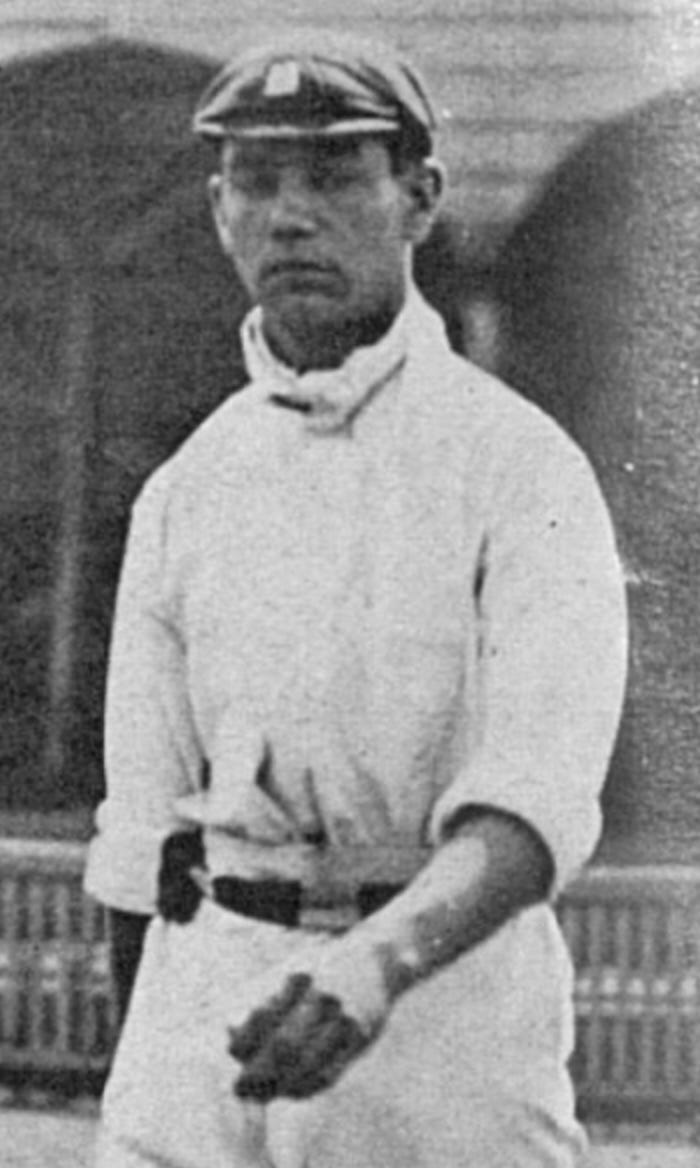
“Tiger” Smith watched his first game of cricket at the age of ten in 1896. With his brother and a group of friends, he climbed a tree outside Edgbaston cricket ground to see the County Championship match against Kent. There were few famous players involved, nor was the game especially exciting. But Smith must have enjoyed it. Within eight years, he was playing alongside many of those he had observed from between the leaves and within fifteen he was England’s first-choice wicket-keeper.
Smith’s career lasted until 1930. He won the County Championship with Warwickshire and the Ashes with England. When he retired, he became an umpire and stood in eight Test matches. And finally, he became one of the most respected coaches in the game, assisting Warwickshire to another County Championship in 1951. He offered advice to Dennis Amiss and Mike Brearley in the 1970s. In 1979, the year he died, he was still talking cricket with Geoffrey Boycott during a Test match.
Few people today have heard of Smith. Even during his career, he never attracted the headline writers nor caused spectators to lean forward in excitement. For Smith, not being noticed represented success: good wicket-keepers and good umpires rarely attract attention. But that is not to say that Smith was a quiet, unassuming man.
Far from it.
Ernest James Smith was born in Birmingham in 1886, the sixth and youngest child of a bricklayer called Hosea Smith and his wife Maria. The latter died in 1900 and at the time of the 1901 census, Smith lived with his father and older brother.
Many years later, Smith recalled: “I was brought up — dragged up would be a better description. I lost my parents at thirteen, leaving me to fend for myself. I was rough and ready then — I’m still rough and ready now — and in those days I really had to struggle.”
The quote comes from Smith’s autobiography. He told his story to Patrick Murphy in 1979 at the age of 91. The book was not published until after he died but was — like Smith — often extraordinary and not a little abrasive. Nothing else exists quite like his account of professional cricket in the first two decades of the twentieth century. The handful of books written by former professionals from that period are very safe, respectful tomes; careful not to offend officialdom. Smith, looking back almost eighty years, had no such concerns. He offered the unvarnished truth.
Or so he claimed. Autobiographies require careful handling by the historian, and Smith’s is no exception. The anecdote about fending for himself after the death of both his parents when he was just thirteen illustrates the point perfectly. Smith’s father lived until 1918, when Smith was 32.
If treated cautiously, Smith’s autobiography offers unparalleled insights into the life of a young professional cricketer in that period.
He described how, after watching that first match in 1896, his interest in cricket grew. But his school did not play the sport, so he learned it in local parks, in street matches played under gas lamps in the back streets of Birmingham. By his own account, he was “always the best bowler and the top batsman because I elected myself the skipper — oh, I was a fine player.” But there was no thought of becoming a professional.
Instead, when he left school at the age of thirteen, he began working for the chocolate firm Cadbury’s, at their Bournville factory, earning 5 shillings and 10 pence for a 58-hour week. At the age of fourteen, he caught his hands in one of the machines and lost the top joints of the third and fourth fingers on his right hand and of the little finger on his left. But this never affected his cricket.
When he was fifteen, an opportunity arose for him to play for the Bournville works’ third eleven.1 Originally, he merely planned to watch his brother Harold play, but the regular wicket-keeper withdrew at the last minute. Smith was called into the team to deputise. Although he had never kept wicket before, he “honestly found it easy”. Impressed, the cricket club gave him the wicket-keeper’s role in the second eleven.
Smith claimed in his autobiography that he rejected an invitation to play for the first team because “they were too flighty and full of airs and anyway they were much older than I was.” Assuming this was true — rather than a nostalgic 91-year-old rewriting the past — it was an unusual strategy to turn down such a promotion. But Smith spent most of his career rejecting the expected route.
One of Smith’s team-mates in the second eleven was a professional county player with Worcestershire, and he recommended Smith to his county.2 Worcestershire gave Smith a month’s trial and offered him terms: “I was 17 and full of confidence because I found wicket-keeping a most natural thing.” But because he was born within Warwickshire’s borders, Worcestershire had to request permission to sign him. Warwickshire refused and offered Smith a trial themselves.
Assigned to the Warwickshire Club and Ground team, Smith immediately performed well. One of his team-mates was Rowland Vint Ryder, the Warwickshire Secretary; he offered Smith a professional contract. By rights, Smith should have mentioned that he was missing the tops of three fingers. Yet he knew that if he did so, the Warwickshire Committee would likely have withdrawn the offer. So he kept it to himself.3
Smith officially joined the Warwickshire professional staff for the start of the 1904 season earning 25 shillings per week (around £25 for the season) which, while hardly generous, was an improvement on the 16 shillings he received at Bournville and involved considerably less work than the 60 hours required there. Any first-team appearances earned an extra £5 for a home match and £6 away, although this was quickly swallowed by expenses such as bed-and-breakfast, travel and lunches.
The Warwickshire professionals with whom he spent all his time were a world apart. They had their own dressing room, their own lunches, their own entrance onto the field. Warwickshire’s amateurs — in theory, several social classes above the professionals; men of “breeding” and independent wealth — kept entirely separate. Their facilities were vastly superior; even the quality of lunches was better. Such practices were common to every county: professionals were supposed to defer to their amateur “betters”.
Not that the professionals were a harmonious group. Smith’s path into the Warwickshire first eleven was blocked by the incumbent wicket-keeper A. F. A. Lilley, who was furiously resisting his own decline as he neared his forties. But he was not an easy team-mate.
Nor were the other professionals particularly sympathetic characters. Septimus Kinneir was a pipe-smoking motorbike-riding socialist whose health was poor after he contracted syphilis in the late 1890s. His batting was joyless and grim, but effective. So too that of W. G. Quaife, who later became an ally of Smith in standing up to the Warwickshire Committee, especially on matters of pay. There was also the tough and serious Jack Parsons, the hard-drinking Crowther Charlesworth and the benevolent Sam Hargreave who took Smith under his wing.
Smith admitted that there was some drinking among the professionals, although never to the point it was a problem. He said that he had remained teetotal until, at the age of 25, a doctor recommended Guinness and boiled eggs as a cure for an illness. He insisted throughout his autobiography that he was never a heavy drinker, but several of his tales involved alcohol.
When not appearing in the first team as Lilley’s understudy, Smith worked on the county groundstaff, taking care of the pitch and bowling to members who required practice.
It was during this period that he acquired his lifelong sobriquet of “Tiger”, when an argument broke out during a card game among the younger professionals. By Smith’s own retelling, a larger player “picked on a small lad and accused him of cheating.” In the resulting brawl, Smith “laid out” the “big fellow”. When Lilley heard of the fight, he described Smith as “Tiger”, after a famous boxer.
The nickname stuck. “Tiger” Smith was not someone to be pushed around. Nor would he ever be.
The professionals’ dressing room was cold, without hot water, and offered just one toilet and two wash basins. But the players generally kept quiet about such problems; competition for places was fierce and trouble-causers could easily be moved aside. Smith recalled that most professionals were too scared of the amateurs to step out of line. There was no doubt where the power lay.
But some dared to question. More confident members of the team, like Quaife or Kinneir, were more willing to speak out. Smith was still a junior member. More than anyone, he should have “known his place”. But he never quite accepted that.
One of the first of his many clashes with the secretary R. V. Ryder arose over money. In his autobiography, Smith offered just a hint. Whenever the county first eleven won a match, the entire professional staff were awarded a £2 bonus. Smith told Murphy that he had “expected” it too. But instead, Ryder “wrote to tell me I was considered a junior still” and therefore he would only receive £1. Had Smith, at the end of his first season, confronted the fearsome Secretary to demand his bonus? The autobiography does not quite say that. But such an interpretation would not be contradicted by Smith’s account.
Certainly, he had a frank discussion with Ryder in his second season. Smith resented how professionals often had to give up their places when an amateur became available for the first eleven. As Smith put it: “The game was still full of Sirs, Lords and a few Honourables and even though a lot of them weren’t good enough, they still played whenever they wished.” During his second season, when he was already limited in his appearances through the presence of Lilley, Smith became aware that some amateurs were “after my place”, and made his feelings known to Ryder through Hargreave.
As a result, Ryder advised him to join the MCC groundstaff at Lord’s. With the help of Hargreave, Smith secured a place and remained a member of the Lord’s groundstaff until 1925. As a result, Warwickshire needed the MCC’s permission before they could play him.
While that might have seemed like it would hamper a county career, it guaranteed Smith better pay — £4 per week, plus a match fee of £6 for two-day games and £3 for one-day games — and more regular appearances. Smith believed it also improved his cricket because he practised with the Middlesex professionals and was able to watch leading amateurs at Lord’s. He also recalled bowling in the nets to MCC members. These included stars of the stage like George Robey and Oscar Asche, who provided him with free theatre tickets, and rich stockbrokers who offered investment tips.
It was also through his appearances for the MCC that he played alongside W. G. Grace, who was then almost sixty but still played regularly below first-class level. Smith recalled how Grace would put a live rabbit in someone’s cricket bag “if he thought you weren't any good.” But Smith also remembered standing up to Grace more than most, earning his respect.
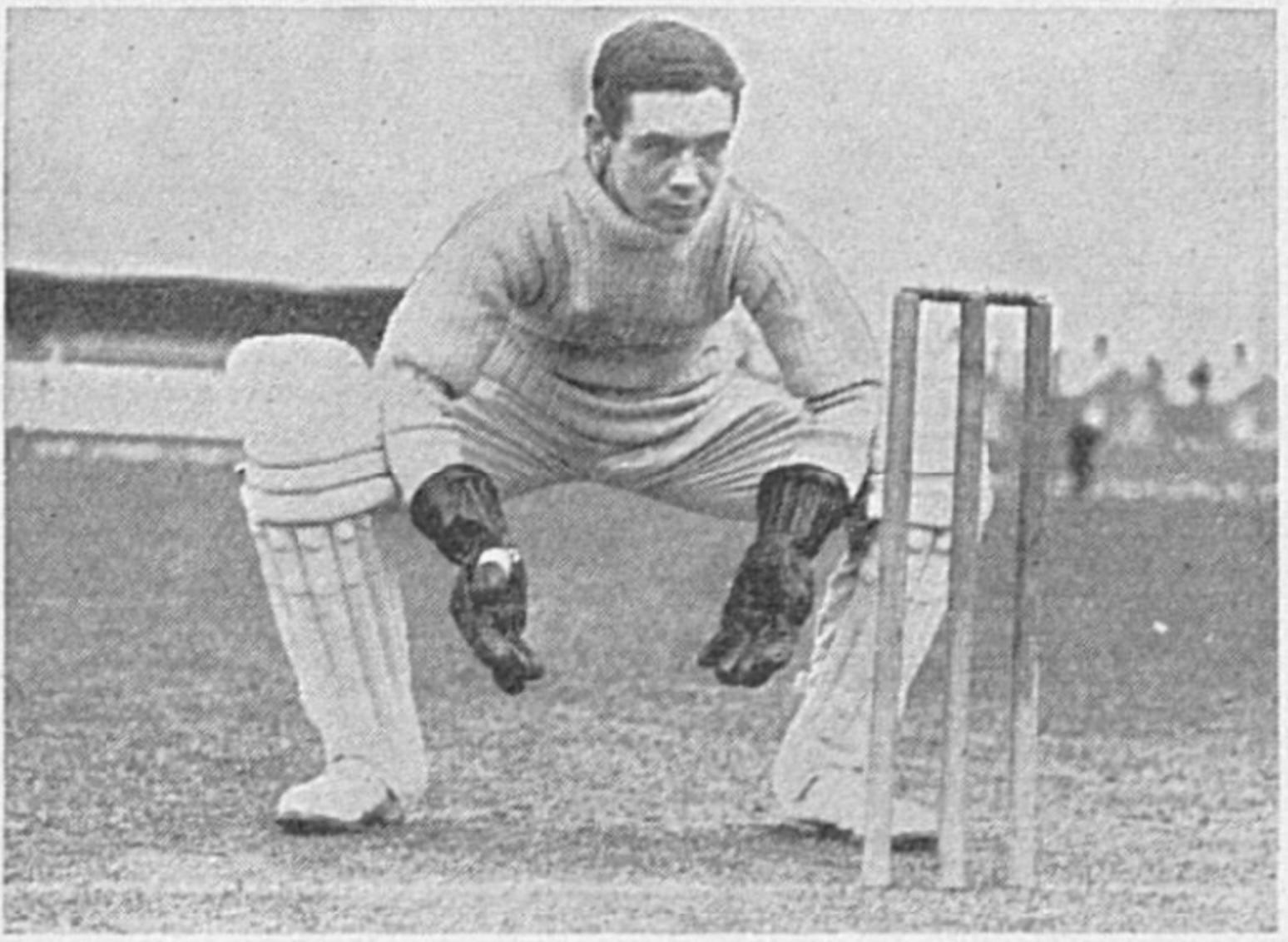
Recollections such as these make Smith’s autobiography a rich source of information. But it is easy to overlook how good he was.
His breakthrough coincided with the arrival in the Warwickshire team of the amateur all-rounder Frank Foster, who bowled left-arm fast and was very difficult for Lilley to take standing up. Seizing his opportunity when Lilley suffered an injury, Smith usurped the wicket-keeper’s position. By 1910, he was Warwickshire’s first-choice, not least because Foster was much more comfortable bowling when Smith was behind the stumps. They developed an excellent partnership: in first-class cricket, generally standing up to the wickets, Smith took 59 catches and made 12 stumpings from Foster’s bowling. His excellent technique meant that he could comfortably stand up to faster bowlers (he usually only stood back to bowlers of express pace like England’s Bill Hitch) without fear of injury: he suffered only one broken finger in his entire career.
His position became even more secure when Foster was appointed Warwickshire captain in 1911. Smith always rated Foster very highly and was something of a confidant for his captain. Lilley was less enchanted and, although he had continued to play as a specialist batter, he was dropped after trying to undermine both Foster’s captaincy and Smith’s wicket-keeping.4 Smith proved a key figure when Warwickshire unexpectedly won the 1911 County Championship. As well as keeping wicket immaculately, he batted better than ever before, scoring his first century for the county.
But Warwickshire owed the victory to Foster’s all-round brilliance and inspirational captaincy. As a result, he was invited to join that winter’s Ashes tour to Australia. So too was Smith, albeit as reserve wicket-keeper to Herbert Strudwick. Yet Foster’s influence proved crucial. His bowling was extremely effective on Australian pitches and he expressed a preference for Smith as wicket-keeper. Therefore Smith took the gloves for the final four Test matches.5
Smith’s wicket-keeping in the second Test was widely recognised as outstanding; he later commented: “Well, you'd got to be good at Melbourne, with forty thousand people watching you.” The highlight of his tour was a pre-arranged dismissal in the third Test at Adelaide when Foster slipped a ball wide of Clem Hill’s leg-stump and Smith completed an astonishing stumping. The umpire Bob Crockett said: “Good God Clem, you’re out!” Smith replied: “Ay, and a long way.” In later years, Smith insisted that he had repeated the dismissal in the second innings but the umpire missed it. Nevertheless, he recalled his pleasure when the legendary Australian wicket-keeper Jack Blackham sought him out after the match to congratulate him on his display behind the stumps: “Well kept, young ‘un”.
If Smith’s batting made less impression — he was usually under orders to hit out late in an innings — he was judged to be an enormous success owing to his efficiency with the gloves. But there are just hints of trouble. He and Foster continued to plot tactics together, aiming for catches and stumpings down the leg-side. But Pelham Warner, the nominal captain of the English side,6 looked askance. In his book of the tour, Warner criticised Smith for the number of byes he conceded in the final Test.
The independent streak emerged again during the 1912 season. Smith retained his England place for the Triangular Tournament held that summer, and he was particularly influential in the final Test against Australia, which decided the winner. England were led by C. B. Fry, whose captaincy had been eccentric all summer; Smith’s bafflement shone through almost seventy years later when he discussed Fry with Murphy.
In that final match, Smith believed that Fry was making an error by prolonging the England second innings in almost impossible batting conditions. Instead, Smith thought it was better to ensure Australia had to bat while the pitch remained difficult. Contrary to Fry’s instructions, Smith persuaded the tail-enders to throw their wickets away. The innings was quickly over and Fry was not happy. But the England bowlers were able to attack Australia that afternoon. Fry again behaved eccentrically in the field, but Smith was a leading tactical force behind the stumps. England won the match — and tournament — before the end of the day.
During the winter of 1913–14, there was further trouble for Smith when he toured South Africa. It was not a full-strength side — English teams visiting South Africa rarely were — but played a Test series. Strudwick was the first-choice wicket-keeper for the tour. Smith was called up as a late replacement when the understudy fell ill on the voyage out. He played only one Test, as a specialist batter, but when the tour ended he was involved in a serious dispute with the tour manager, Ivor Difford, who had been provided by the South African Cricket Association.
Amid rumours that the professionals had been drinking heavily — an accusation that followed Smith throughout his career despite those protests of innocence in his autobiography — Difford tried to withhold tour fees for some players. For example, he attempted to reduce Smith’s fee by £50 as he had missed the start of the tour. It took the intervention of Douglas, once again captaining England, to ensure that the professionals were paid in full.
England did not play again until after the First World War and so Smith’s international career ended in South Africa. In eleven Tests, he had been on the winning side nine times and never lost.
By the time the First World War broke out, Smith was — with Strudwick — the best wicket-keeper in England and an increasingly effective batter. In 1912 and 1913, he only narrowly missed out on 1,000 first-class runs for the season, the mark of a good batter and a rare achievement for a specialist wicket-keeper. But the war changed things. Smith was never quite as good with the gloves again.
Part of the reason might have been an injury acquired during military training. He enlisted in the Warwickshire Regiment but during one march, his sergeant-major suddenly called halt and the line fell over. Although Smith was initially amused, he quickly realised that he could not stand: he had damaged his knee and was discharged on medical grounds a few months later. He later admitted that he “wasn’t sorry”. He lost too many friends and saw too many people return from France with serious injuries to regret missing active service. Instead, he spent the war working in a Birmingham munitions factory.
When cricket resumed, Smith struggled with the gloves. He admitted in his autobiography that his form was “up and down”, and it took him time to regain the rhythm of wicket-keeping. As a result, he lost his England place.
But compensation came in dramatically improved batting form. He passed a thousand runs in a season for the first time in 1922, a feat he repeated five more times, and his average climbed above thirty in most seasons, the mark of a good batter at county level. Probably his best innings came in 1925, when Warwickshire needed 392 to win in four hours against Sussex; Smith was opening the batting by then, and scored 139 not out as the team hit off the runs to win by nine wickets (in 94.5 overs). And he hit his career-best score of 177 against Derbyshire in 1927, at the age of 41.
By the middle of the decade, he was back in the thoughts of selectors. He was chosen to take part in an MCC tour of the West Indies in 1925–26: no official Tests were played, but there was a hard-fought series against a strong West Indies side. Towards the end of the tour, Smith fell ill with malaria. It was serious for a time, and although he recovered, he felt the after-effects for years; he wrote that “every November, I’d get the fever, I’d shake like a leaf and take to my bed for a week.”
Even so, Smith might have hoped to regain his England place. Several men had been tried as wicket-keeper without standing out. Strudwick generally remained first choice, but nothing had been settled by the time of the 1926 Ashes. Smith was picked for a trial match and seemed to be a leading candidate, not least because England for a time tried a leg-theory attack which required a wicket-keeper adept at taking the ball down the leg-side. Smith told Murphy that Pelham Warner, by then the chairman of selectors, promised him that he would play in the Test series. He did not. Bitterly disappointed, his form plummeted for the rest of the 1926 season.
Smith’s fellow professionals at Warwickshire lacked sympathy, and he felt isolated. He later wrote: “Things were never quite the same for me as a player after that … The fun was going out of my cricket.”
But problems had been building for some time.
Almost everyone who was part of the Warwickshire team in the 1920s had their own litany of complaints. It was not a happy dressing room.
Many issues centred around the autocratic R. V. Ryder. The county captain F. S. G. Calthorpe generally bowed to Ryder’s demands, but his successor Bob Wyatt was less accommodating. So too the older professionals, Smith and W. G. Quaife. In his biography of Wyatt, Gerald Pawle wrote: “[Quaife] and Tiger Smith, another outspoken and independent figure, were regarded by Ryder as the shop stewards for the team, continually airing grievances about pay and conditions, and they fought a never ending battle with the Secretary, who was equally determined to keep them in their place.”
Smith considered Ryder to be “a proper autocrat” who interfered with the running of the team. Ryder in turn was suspicious of Smith; for example, he suspected that he drank too much, a view not helped by Smith’s admitted habit of having a glass of beer before play each morning, to “[help] me sweat freely”. And when things went wrong, Ryder was quick to blame Smith.
Other internal battles raged. Quaife argued frequently with the county coach, Syd Santall, who favoured his son, the talented but ill-disciplined Reginald Santall. Quaife in turn wanted his own son Billy to be given chances. In such a strained atmosphere, Warwickshire’s results on the field were rarely better than mediocre. The county were almost always in the bottom half of the County Championship table.
As long-standing professionals like Quaife gradually retired, Smith was left isolated. He clashed more and more with Ryder and the committee. Ryder increasingly viewed Smith as a bad influence on the younger professionals, some of whom lacked the discipline that Warwickshire expected. As the senior professional, Smith was often blamed for their poor behaviour.
Nor did he get along well with Wyatt, who increasingly deputised as captain towards the end of the 1920s and was appointed in Calthorpe’s place for the 1930 season. Smith viewed him as joyless and selfish.
In the end, Smith decided to end his career after the 1930 season. As he put it: “I didn’t feel at all nostalgic or sad, I just wanted ‘out’. I had a nice house in Torquay, a small boat, two daughters at grammar school down there and my coaching in South Africa [where he spent many winters] so I wasn’t short [of money].” He scored fifty in his final match (which took him past a thousand runs in his final season), and although the Committee offered him another year, he declined. As always, he did it on his own terms.
According to Smith, the following year when he visited the ground during a game, Ryder bought him a drink and apologised for blaming him for many things that were not his fault. As far as Smith was concerned, after their long and bitter relationship, their parting was harmonious.
But by then, Smith had begun the next phase of his career.
Warwickshire nominated Smith to be a first-class umpire for the 1931 season, and he was accepted, having turned down offers of coaching roles at Eton College and Malvern College. He received no training and around £10 per match, but quickly established himself as a good umpire who stood for no nonsense. He kept potential trouble-causers like Yorkshire’s George Macaulay, who liked to pressurise umpires, in their place. In Smith’s first season as umpire, Macaulay began roughing up the pitch with his bowling boots; Smith stood his ground and Macaulay had to back down.
It was one thing asserting authority over a fellow professional like Macaulay. But it was another matter when county captains tried to impose their will. As part of the cricketing establishment, captains — almost always amateurs in this period — held considerable authority over umpires. They could effectively veto an appointment to the first-class list, potentially ending a career.
Surrey’s Percy Fender was notorious for lodging official complaints with any umpire who stood up to him. Inevitably, he clashed with Smith, who was never going to give way, not even to a leading amateur like Fender. The Surrey captain reported Smith to the MCC. But Smith discovered that the authorities there had dismissed Fender’s complaint, satisfied that he was doing a good job.
Smith quickly progressed up the umpiring ladder. Perhaps his diplomatic handling of one potentially controversial incident convinced the MCC of his merits. He was one of the umpires at Leyton in 1932 when Percy Holmes and Herbert Sutcliffe scored 555 against Essex for the first wicket, breaking a 35-year-old record. As soon as they passed the old record of 554, Sutcliffe was out. But minutes later, the scoreboard reverted to 554: there had been an error in the scoring and it looked as if the record had merely been equalled. It was Smith who convinced the Yorkshire scorer, Billy Ringrose (who was adamant only 554 runs had been scored) that there had been an unrecorded no-ball. Although Smith insisted that he had not “fiddled it”, everyone was relieved.
After officiating in a Test trial match in 1932, Smith took charge of Tests against the West Indies in 1933 and South Africa in 1935. The authorities were convinced. For the 1937 season, he umpired two Tests against New Zealand. But the biggest mark of confidence was that he umpired two Tests during the 1938 Ashes series. By the time of the Second World War, he was clearly one of the most respected umpires in England.
The Second World War brought cricket to a halt, and effectively ended his umpiring career. He served as an ARP Warden over the next few years, living with his two adult daughters. His first wife, whom he married in 1909, had died sometime between 1925 and 1935.
Smith’s association with Warwickshire lasted many more years. After the war, he was appointed — somewhat to his surprise — as Warwickshire’s coach and held the coaching position for ten years. By then Smith had spent so long with the county that, he once joked, “the gatemen are beginning to know me now.” During this time, Warwickshire won the 1951 County Championship for only the second time, after the victory under Foster in 1911.
After being replaced as coach in 1955 by Tom Dollery, Smith ran the indoor school until 1970. As a coach, he preached an attacking style and was highly renowned, so that players from other counties sometimes came to him for advice. He had an ability quickly to identify and correct technical issues.
When he retired in 1970, Smith had been associated in one way or another with Warwickshire for 66 years. There are few parallels for such a long career in the game, nor one which was so consistently successful across so many disciplines. And in retirement, he maintained an interest in the game and was a regular visitor to Edgbaston. His autobiography touched upon the state of English cricket in the 1970s — he lamented the weakness in batting — and he was a keen admirer of players like Clive Lloyd, Viv Richards, Rohan Kanhai, Barry Richards and a young David Gower.
Although he grumbled about contemporary cricket, he never became a bitter figure who insisted the game was better in his day. His only regret was that wicket-keepers no longer stood up to the stumps as much. He called them “glorified long-stops” who “pinch first slip’s catches”.
Had he mellowed in his final years? He insisted to Murphy — perhaps not entirely seriously — that he had not. And yet, that remarkable autobiography might suggest that the “Tiger” was still there. Still refusing to keep quiet, still refusing to accept the world on anyone else’s terms. The same instinct that made him stand up to the “big fellow” in the card game, to R. V. Ryder and even to C. B. Fry.
When Smith died in 1979, survived by his second wife, there was a certain irony that his Wisden obituary was written by the son of his long-time nemesis R. V. Ryder:
“Always a fighter, [Smith] had a razor-sharp sense of humour and loved the rigour of the game. ‘It was “Good morning!” before we started and “How’s that!” for the rest of the day,’ he said of one hard-fought contest … He loved thinking about the cricket, and in particular about the craft of wicket-keeping. In assessing Bert Oldfield and Dick Lilley as the greatest wicket-keepers who have ever played, he referred to an enthusiasm greater even than dedication. He was too modest to claim that attribute for himself, but others would claim it for him.”
Many factories had their own cricket team in this period, often employing a professional to strengthen the side.
Albert Bird, who would have been in his mid-twenties when he knew Smith, played for Worcestershire from 1895 to 1909.
The county vice-chairman noticed the old injury when shaking Smith’s hand in 1912 and admitted to Smith that the county would never have signed him had they known. But by then, Smith was the England wicket-keeper.
Lilley lost his place after one particular incident when Foster discovered he had encouraged the team to make a protest. But he had been stirring trouble for some time. In his autobiography, Smith wrote that Foster told him during one match: “You’re keeping wicket well considering you were out till three in the morning.” When Smith asked who had told him, Foster replied that it had been Lilley. Smith wrote: “The truth was that I’d been up at three taking off Dick’s leg bandages that he needed for his varicose veins — and I’d hardly had a drink!”
Smith recalled that the acting England captain J. W. H. T. Douglas was happy to give Smith a chance out of a desire to be fair to both wicket-keepers. Contemporary reports suggested that Strudwick was injured, but Smith would probably have played anyway as a specialist batter.
Warner missed the entire Test series with a serious illness. In his absence, J. W. H. T. Douglas captained the side. Towards the end of the tour, Warner was well enough to attend matches as a spectator.
Thank you for such a brilliant article - I have a copy of the afore mentioned book. In my younger days as a member I used to see 'Tiger' sitting in the museum watching the days play.